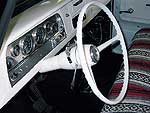
 Before Before
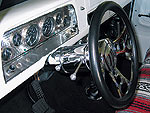 After After
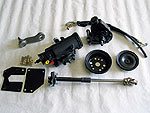 Every single component needed to convert
your classic over to power steering is available from Classic Performance
Products. Shown for this particular application is the 12.7:1 ratio power
steering box, pitman arm, mounting brackets, rag joint, intermediate shafts,
and coupler. The power steering pump kit comes with the pump and correct
brackets, as well as the hoses and correct pulleys needed for the job. Every single component needed to convert
your classic over to power steering is available from Classic Performance
Products. Shown for this particular application is the 12.7:1 ratio power
steering box, pitman arm, mounting brackets, rag joint, intermediate shafts,
and coupler. The power steering pump kit comes with the pump and correct
brackets, as well as the hoses and correct pulleys needed for the job. |
|
Project Old School: Luxury Box
Installing Power Steering From CPP and Topping it With an ididit Tilt Column
By Jeremy Cook
As I discussed last month, Project Old School has been
on the road for over a year now. And while it's been a blast to drive, long
cruises can start to seem like a chore when you're driving without power
steering. The truck wasn't all over the road or anything; I already replaced
the inner and outer tie rod ends when I rebuilt the frontend. But when I
had to make several three-point turns at last year's Cruisin' for a Cure,
I knew an eventual upgrade was in order.
Swapping out the stock manual steering boxes on '60-72
GM trucks for a power steering box found on '69-76 1/2-ton trucks is becoming
increasingly popular ('77-87 boxes will work, too, but they use metric fittings).
It's probably the single biggest difference you can make to your classic
truck where everyday driving is a concern. Classic Performance Products
is one of the largest suppliers of power steering conversions there is and
can supply every single component needed for the job. In addition to a rebuilt
box, which carries a 12.7:1 turning ratio instead of the stock 14:1 ratio
(as well as a lifetime warranty), CPP supplies the mounting brackets needed
for the job. This adds the much-needed strength to that area of the frame.
The power steering pump, mounting brackets, and a variety of pulley options
are also available to make the install go that much smoother.
I also decided it was time to start adding some shiny stuff
to Old School. Last month it was the Gennie Shifter. This month it is a
chrome tilt column from ididit, Inc. Part of their Retro-Fit Series, the
column is built to be a direct replacement for the stocker and is available
with or without a column shifter. The unit is available from CPP or ididit
in bare steel, chrome, or polished aluminum. These tilt steering columns
include all the levers and knobs and are completely wired for self-canceling
turn signals, a four-way flasher, and a horn. The neutral safety switch
is even included on the shift-column version. We topped our new column with
a brand-new chrome and leather steering wheel and adapter kit available
from CPP. The chrome makes upkeep a snap and is a nice alternative if you're
not trying to match your billet wheels. With the help of CPP's Alan, we
performed the entire install in less than a day, and I've been enjoying
the effortless steering ever since. For more information about CPP's entire
line of power steering conversion parts or the Retro-Fit series of columns
from ididit, give them a call or check out their Web site using the information
in the source box that follows.
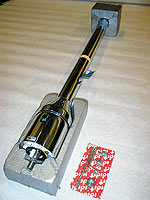 This Retro-Fit Series column from ididit
is built specifically for the '60-66 GM trucks and comes ready to install.
We also ordered a set of ididit's new Deco Knobs for the hazard, tilt lever,
and turn signal. You can order these columns in chrome, polished aluminum,
or ready to paint to match your stock interior. This Retro-Fit Series column from ididit
is built specifically for the '60-66 GM trucks and comes ready to install.
We also ordered a set of ididit's new Deco Knobs for the hazard, tilt lever,
and turn signal. You can order these columns in chrome, polished aluminum,
or ready to paint to match your stock interior.
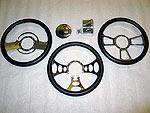 New from CPP are these leather-wrapped chrome
steering wheels. They are available in several styles, but the center one
pictured had the hot rod look I was looking for. The adapter kit comes in
chrome as well. New from CPP are these leather-wrapped chrome
steering wheels. They are available in several styles, but the center one
pictured had the hot rod look I was looking for. The adapter kit comes in
chrome as well.
|





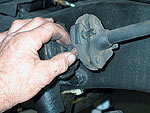 The manual box was still in decent condition,
as far as 40-year-old trucks go, but my arms were ready for an upgrade.
Alan began by removing the rag joint that attaches the steering shaft to
the box. Next, the center link was pried off of the pitman arm.
The manual box was still in decent condition,
as far as 40-year-old trucks go, but my arms were ready for an upgrade.
Alan began by removing the rag joint that attaches the steering shaft to
the box. Next, the center link was pried off of the pitman arm.
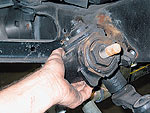 After buzzing off the mounting bolts,
the stock box was removed from the framerail.
After buzzing off the mounting bolts,
the stock box was removed from the framerail.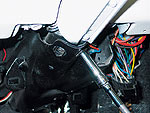 The column mount in the '60-66 trucks
also houses the brake-light switch and stop for the brake pedal, as well
as the E-brake assembly. The bolts were removed and the mount came off,
allowing the column to hang free.
The column mount in the '60-66 trucks
also houses the brake-light switch and stop for the brake pedal, as well
as the E-brake assembly. The bolts were removed and the mount came off,
allowing the column to hang free.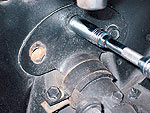 In the engine compartment, this bracket
bolts to the firewall and clamps to the column. It was removed next. At
this point, we could have simply removed the inside cover that surrounds
the column on the inside of the firewall and slid the entire unit out, but
I buried it in Dynamat insulation a few months back! We opted to tear down
the column a bit more so it would slide though the cover instead.
In the engine compartment, this bracket
bolts to the firewall and clamps to the column. It was removed next. At
this point, we could have simply removed the inside cover that surrounds
the column on the inside of the firewall and slid the entire unit out, but
I buried it in Dynamat insulation a few months back! We opted to tear down
the column a bit more so it would slide though the cover instead.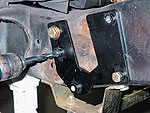 With the old column removed we could start
the upgrade. Power steering wasn't an option until the '68 model year, and
the factory had to dimple the frame to make room for the larger box. A power
steering box can't just be bolted to a non-dimpled frame. One solution is
to try and heat the framerail and dimple it yourself, or a much easier and
safer method is to use this mounting plate from CPP. The mounting brackets
were test-fit to the framerail by using two of the existing holes before
drilling the other two.
With the old column removed we could start
the upgrade. Power steering wasn't an option until the '68 model year, and
the factory had to dimple the frame to make room for the larger box. A power
steering box can't just be bolted to a non-dimpled frame. One solution is
to try and heat the framerail and dimple it yourself, or a much easier and
safer method is to use this mounting plate from CPP. The mounting brackets
were test-fit to the framerail by using two of the existing holes before
drilling the other two.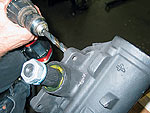 For this particular kit, one of the threaded
holes of the power steering box needed to be drilled out as per the directions.
For this particular kit, one of the threaded
holes of the power steering box needed to be drilled out as per the directions.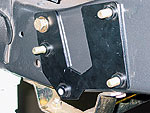 After cleaning and painting the area,
the brackets were mounted up permanently.
After cleaning and painting the area,
the brackets were mounted up permanently.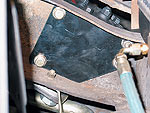 The inner plate supplied by CPP adds a
ton of much-needed strength and support to this area of the frame (which
is prone to cracking on the trucks that used this box).
The inner plate supplied by CPP adds a
ton of much-needed strength and support to this area of the frame (which
is prone to cracking on the trucks that used this box).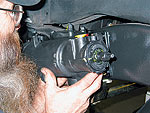 The box was set into place and tightened
down.
The box was set into place and tightened
down.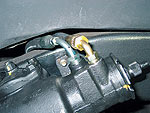 Alan attached the new pitman arm and rotated
it to center before the center link was reattached. Both the pressure and
return lines were then routed between the frame and the inner fender without
any modifications.
Alan attached the new pitman arm and rotated
it to center before the center link was reattached. Both the pressure and
return lines were then routed between the frame and the inner fender without
any modifications.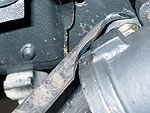 On this application, part of the bumper
bracket had to be trimmed to clear the new box.
On this application, part of the bumper
bracket had to be trimmed to clear the new box.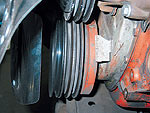 Moving on to the power steering pump,
Alan added a third pulley to the crank pulley to run the pump.
Moving on to the power steering pump,
Alan added a third pulley to the crank pulley to run the pump.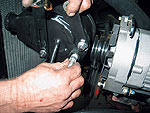 Alan hung all of the mounting brackets
from the power steering pump first, and then attached the pressure and return
hose.
Alan hung all of the mounting brackets
from the power steering pump first, and then attached the pressure and return
hose.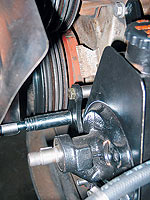 The lower bracket attaches using the two
holes in the block near the crank pulley.
The lower bracket attaches using the two
holes in the block near the crank pulley.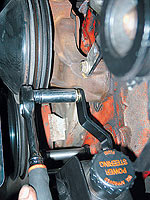 The adjustment bracket attaches to the
lower water pump bolt.
The adjustment bracket attaches to the
lower water pump bolt.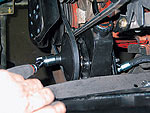 Alan then attached the pulley and hung
the belt. The belt was adjusted from the stud on the back of the pump (see
arrow).
Alan then attached the pulley and hung
the belt. The belt was adjusted from the stud on the back of the pump (see
arrow).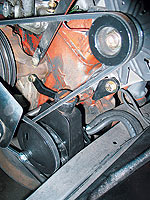 It's a tight fit down near the framerail,
but the bracketry positioned the pump in the ideal spot and left room for
adjustment. One problem we did run into, though, was that once the pump
was mounted, it interfered with the alternator belt. We fixed this by installing
a double-groove pulley on the alternator, which moved the belt out slightly
so it could now run off the second groove on the crank.
It's a tight fit down near the framerail,
but the bracketry positioned the pump in the ideal spot and left room for
adjustment. One problem we did run into, though, was that once the pump
was mounted, it interfered with the alternator belt. We fixed this by installing
a double-groove pulley on the alternator, which moved the belt out slightly
so it could now run off the second groove on the crank. We were now ready to start on the new
ididit column. We taped up the column to keep it from getting scratched
during installation. There are a few inches of play regarding where you
want the column mounted. But since I'm a fairly large guy, we pushed it
as far through the floor as possible.
We were now ready to start on the new
ididit column. We taped up the column to keep it from getting scratched
during installation. There are a few inches of play regarding where you
want the column mounted. But since I'm a fairly large guy, we pushed it
as far through the floor as possible.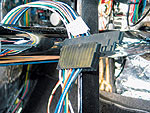 The ididit column uses a standard GM 3
7/8-inch connector that attached directly to the Painless wiring harness.
Several adapters are also available to make most trucks a simple plug-in.
The ididit column uses a standard GM 3
7/8-inch connector that attached directly to the Painless wiring harness.
Several adapters are also available to make most trucks a simple plug-in.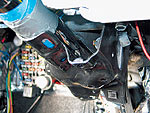 We cleaned and painted the column mount
and reinstalled it. The column was pretty secure as is, but ididit recommends
that you use two short set screws through the mount into the column.
We cleaned and painted the column mount
and reinstalled it. The column was pretty secure as is, but ididit recommends
that you use two short set screws through the mount into the column.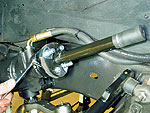 Alan attached the intermediate shaft to
the new rag joint and secured it to the input shaft on the box.
Alan attached the intermediate shaft to
the new rag joint and secured it to the input shaft on the box.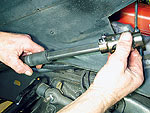 The stainless Double-D shaft with the
universal joint coupler attached was slid into place.
The stainless Double-D shaft with the
universal joint coupler attached was slid into place.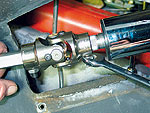 This universal joint coupler fits a Double-D
shaft on one end and splines on the other, making this a simple bolt-on
affair. If you choose to run a splined shaft, you will need to know the
exact measurements beforehand.
This universal joint coupler fits a Double-D
shaft on one end and splines on the other, making this a simple bolt-on
affair. If you choose to run a splined shaft, you will need to know the
exact measurements beforehand.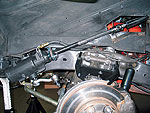 This under-fender shot shows a clean and
simple setup that will offer years of trouble-free steering.
This under-fender shot shows a clean and
simple setup that will offer years of trouble-free steering.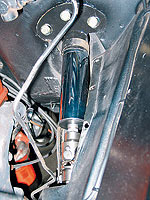 On the firewall, the clamp was reattached
to the column, and the bracket was bolted back to the firewall.
On the firewall, the clamp was reattached
to the column, and the bracket was bolted back to the firewall.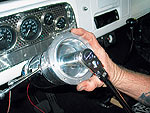 Before bolting on the adapter and steering
wheel, we installed the hazard knob and the tilt and turn-signal levers.
Alan then set the adapter into place and snugged it down.
Before bolting on the adapter and steering
wheel, we installed the hazard knob and the tilt and turn-signal levers.
Alan then set the adapter into place and snugged it down.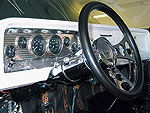 The chrome wheel was mounted up next,
and the center cap even covers the Allen head bolts. I never imagined what
a difference a column and steering wheel could make to the overall appearance
of the cab! And my arms don't hurt after maneuvering through car shows or
parking lots anymore!
The chrome wheel was mounted up next,
and the center cap even covers the Allen head bolts. I never imagined what
a difference a column and steering wheel could make to the overall appearance
of the cab! And my arms don't hurt after maneuvering through car shows or
parking lots anymore!